Saturday, June 27, 2009
Thursday, June 25, 2009
Palestinian kids with kites reclaiming land and rights
ISM Gaza Strip activists participated in a children event/protest organized by the Beit Hanoun Local Initiative, close to the so called "buffer zone" that Israeli occupation forces are trying to impose all along the Green Line. Among the ruble of recently demolished homes, with other children watching from their homes full of bullet holes, the children of Beit Hanoun launched their kites, defying the siege and the buffer zone and reclaiming land and rights. The Israeli occupation forces participated also to the event with their military balloons...
Beit Hanoun Local Initiative press release of Tuesday June 23, 2009 (translation by ISM Gaza Strip)
Beit Hanoun Local Initiative launches its Children's activities: Let me Play Freely, in Beit Hanoun
On Tuesday June 23, 2009, the Beit Hanoun Local Initiative group organized a kite competition with the participation of Beit Hanoun children. Six organizations participated in this event, which are from Beit Hanoun: Family Development Centre, Izbet Beit Hanoun Development and Progress centre, Adham Charity centre, Jerusalem Centre for health and society, Taghreed Association for Culture & Development, and the Promising Generation group.
Five children from each organization were chosen to hold big colourful kites, some with the colours of the Palestinian national flag, while other kites had slogans such as: The Children of Palestine Have a Right to Life, a Right to Play, We Refuse Occupation, We want to live like other children in the world, No to the Israeli Occupation.
The "Let me Play Freely" activities was launched in a march beginning from the centre of the town, till the buffer zone east of Beit Hanoun, near Sderot. There, the children released their kites in the air.
Children who are physically challenged and those with special needs participated in the activity too. They played and released kites in the air.
Palestine... we shall remain here despite all the damage and the siege
The Beit Hanoun Local Initiative coordinator, Saber Al Zaaneen, certified that the activities and events shall continue in the buffer zone despite the occupation forces' policies that aim at forced removal of familes, and farmers from their places of residence. He called upon the Intenational community to take on a move to stand with the Palestinian people against occupation and neo-colonialism.
On his part, the coordinator of league for activities and events in the Beit Hanoun local initiative stated that the initiative will work during the summer period in organizing and launching children's activities and events.
At the end of the day's activity, the initiative and fellow solidarity workers distributed modest gifts to the children who won the "Let me Play Freely" competition.
Beit Hanoun Local Initiative
Media Committee- Beit Hanoun, GS-Palestine
Beit Hanoun Local Initiative press release of Tuesday June 23, 2009 (translation by ISM Gaza Strip)
Beit Hanoun Local Initiative launches its Children's activities: Let me Play Freely, in Beit Hanoun
On Tuesday June 23, 2009, the Beit Hanoun Local Initiative group organized a kite competition with the participation of Beit Hanoun children. Six organizations participated in this event, which are from Beit Hanoun: Family Development Centre, Izbet Beit Hanoun Development and Progress centre, Adham Charity centre, Jerusalem Centre for health and society, Taghreed Association for Culture & Development, and the Promising Generation group.
Five children from each organization were chosen to hold big colourful kites, some with the colours of the Palestinian national flag, while other kites had slogans such as: The Children of Palestine Have a Right to Life, a Right to Play, We Refuse Occupation, We want to live like other children in the world, No to the Israeli Occupation.
The "Let me Play Freely" activities was launched in a march beginning from the centre of the town, till the buffer zone east of Beit Hanoun, near Sderot. There, the children released their kites in the air.
Children who are physically challenged and those with special needs participated in the activity too. They played and released kites in the air.
Palestine... we shall remain here despite all the damage and the siege
The Beit Hanoun Local Initiative coordinator, Saber Al Zaaneen, certified that the activities and events shall continue in the buffer zone despite the occupation forces' policies that aim at forced removal of familes, and farmers from their places of residence. He called upon the Intenational community to take on a move to stand with the Palestinian people against occupation and neo-colonialism.
On his part, the coordinator of league for activities and events in the Beit Hanoun local initiative stated that the initiative will work during the summer period in organizing and launching children's activities and events.
At the end of the day's activity, the initiative and fellow solidarity workers distributed modest gifts to the children who won the "Let me Play Freely" competition.
Beit Hanoun Local Initiative
Media Committee- Beit Hanoun, GS-Palestine


Monday, June 22, 2009
IOF Penetrates in Eastern Al-Bureij Camp
21-6-2009
Al Mezan
---------------------------------------------------
Al Mezan
Time: 2.30pm
---------------------------------------------------
Israeli forces invade central Gaza after mortar fire | |||
| |||
|

Saturday, June 20, 2009
Gaza: Israeli artillery strikes hit central Strip; destroy agricultural equipment
Date: 20 / 06 / 2009 Time: 09:44 | |
 |
| [Ma'anImages] |
No casualties were reported, though extensive damage was done to equipment for crop harvesting.
Thursday, June 18, 2009
Rotting in the "Buffer Zone" or "The Shalom of Israel"
Ahmed Abu Hashish, a Bedouin teenager of 18 years from a rural community in the northern Gaza Strip had been missing for 54 days.
A shepherd then noticed a murder of crows on a patch of land from which there was also a foul stench emanating, but he could not approach close enough to investigate. This patch of land is in what Israel calls the “buffer zone”. A strip of land within “The Strip” which abuts the border with Israel, and in which the Israeli military enforce a no-go decree by shooting, from positions on their side of the border, at anyone who breaks it. It feels like a no-mans land, typically empty of people - or at least the living.
Of course most Gazans now choose not to go there. Others go out of necessity, desperation, or a resolve not to be forced off their land. Usually they survive. The soldiers don’t always shoot with the firm intent to kill. Often the shooting‘s just very, very close - enough to terrify. Enough to make one believe that the intention of the shots are to kill, and that the next one might. And the fact is that the next one might.
Ahmed’s father, Abu Ayesh, knew that this patch of land was most likely where his son now lay, slowly decomposing in the hot summer heat. No “official” organisations could or would help him search for his son’s body in this area - even the International Committee of the Red Cross who might normally coordinate with the Israeli Military in matters such as this had refused. He then requested assistance from the Beit Hanoun Local Initiative, and from the International Solidarity Movement (ISM).
On Sunday 14th June, members of Ahmed’s family including his father, and volunteers from the Beit Hanoun Local Initiative and the ISM ventured “out” into the “buffer zone“. As we arranged ourselves into a line to sweep along, and scour the land for a corpse, we could see Israeli jeeps and hummers congregating just across the border fence next to us. N from the ISM communicated with the soldiers over a megaphone, informing them of our purpose, and of our status as civilians. Many of our number were high visibility vests, drawing attention to the fact that we were a group of civilians.
Within minutes of starting our search however, the first shots rang out.
This land over which we were treading was rough, and speckled with thorn bushes. Maintaining our line, and ensuring that we didn’t pass some spot of ground unnoticed proved to be very challenging in these conditions - navigating our way through the the scrub, scanning the ground around us for a corpse, and instinctively attempting to avoid the bullets that split the air with an audible hiss.
We pressed on, and the gunfire waxed and waned - sometimes from assault rifles, sometimes from a machine gun, and punctuated with the odd explosion. Soldiers were visible on top of their jeeps, and on foot right up against the fence. N continued to communicate with them, requesting that they stop shooting at us.
Suddenly we spotted Ahmed’s body. As two of the Bedouins approached and began crouching down to examine it, more shots suddenly rang out which were obviously directed at them. They dived for cover away from the body. More of our group converged on the spot where the body was. We began wrapping it in a sheet, to carry it off the field. The stench of decay was nauseating, and a quick glance at the state of the corpse after lying there open to the elements for 54 days, was enough to induce an urge to retch.
As we rushed to take Ahmed’s body away, the shooting only intensified. We were all heading away from the fence. We’d told the soldiers over the megaphone, that we’d found the body and that we were going. Ahmed’s father hurriedly and in anguish attempted to catch up with the bearers of his son’s corpse, wailing and lamenting his loss as he did so. Still the bullets whistled past our heads, or into the ground behind us.
It struck me, when we finally got out of range of the soldiers’ guns, that our presence in that area that day must not have come as any surprise to them. It was most likely them who had shot Ahmed in cold blood some 54 days previously. They would have known where his body lay. The Israeli military never informed anyone of this. They did not pass on news of Ahmed’s murder to his family. Instead, they waited for almost two months, knowing that at some point and despite the danger, a search party might come looking for the corpse.
Was it necessary to shoot at a group of civilians on a humanitarian mission? Was it necessary to continue shooting at us as they left? Was it necessary for their bullets to force a grieving father to face his own mortality in the very moment he was compelled to recognise that of his son.
Wednesday, June 17, 2009
Beit Hanoun Local Initiative Volunteers & International solidarity workers subjected to IOF shootings and grenades eastern Beit Hanoun and found body
Press Release:
Beit Hanoun Local Initiative Volunteers & International solidarity workers subjected to IOF shootings and grenades
eastern Beit Hanoun and found body of martyr reported missing for more than 50 days
Beit Hanoun- A group of the Beit Hanoun Local Initiative along with some members of the ISM headed to eastern area of the Beit Hanoun to buffer zone on the borders near a military base of the IOF called the Nasb el Tithkary.
The volunteers and solidarity workers headed to the area based on a humanitarian request from the family of the missing person and martyr, Ahmad Salama Eid Abu Hashish, 18 years, who is a resident of the Abu Safiyya region of the south eastern beit hanoun area . after the volunteers and solidarity workers arrived, the IOF began shooting directly at them to force them to stop moving towards the border. however, despite the threat, they headed towards the fence. after that, many soldiers headed to the fence and there was about eight jeeps and a hummer where the soldiers in them shot at the volunteers and solidarity workers in addition to using grenades that they bombed near the fence. But, the volunteers and solidarity workers continued their search and found the body of the young man decomposed as it is at about 50 metres from the fence in the shrubs. when the volunteers were picking up the body, the occupation forces began shooting at them directly, but that did not stop the volunteers from continuing their work and after managing to pick up the body, they ran towards the west away from the death and bullets that were targeting them.
saber al zaanneen, the beit hanoun local initiative coordinator, stated that "we are volunteers serving humanity and society, a call issued by the abu hashish requesting finding their missing son whom they have searched endlessly for everywhere with no result, asked us to help them in their search at the buffer zone. at once, we set search with ISM members who joined us on Sunday the 14th of June along with the father of the martyr and two other family members . We were subject to the shooting of bullets and grenades. Despite that, we continued our humane mission."
The martyr, Ahmad Abu Hashish's, body was transfered by an ambulance from the Beit hanoun hospital after the volunteers were capable of carrying the body from the buffer zone to around a kilometre of walking by foot. the local initiative expresses its condolences to the family of the martyr and wishes them patience and strength during this difficult time.
The Media Office- Beit Hanoun Local Initiative 14/6/2009
Shot at Point of Desperation
Moments of Gaza
Ahmed Abu Hashish, 20 years old bedouin, is his parents' youngest child out of three other young men. He worked in a laundry shop, and lived in utter poverty with his mother, father and three elder brothers.
We went to the funeral and his mother, Umm Ayyash, had a few things to say.
Ahmed, as usual, came back home from work at around four o'clock on the 21st of April, 2009. He left home without telling his mother anything about his whereabouts, and did not return. Umm Ayyash fixed his mattress and pillow, and it was around 11 in the evening with no word from Ahmed. After two days of searching the neighborhoods, and checking with friends and relatives with no word from Ahmed, Abou Ayyash went to the Beit Hanoun police station to report his youngest son missing. The family also went to the Red Cross to ask if Ahmed had been abducted and imprisoned by the Israelis. The Red Cross checked with the prison administrators, but no word of Ahmed. The local police found nothing within the Strip about him.
His family supposed that he had tried to cross the fence to get into the 1948 lands to find work and try to surpass their daily income of around 8 shekels, which is around 2 USD. He had spoken previously about his want to find better job oppurtunities and, thus, a better life style. Previously, Palestinians in Gaza used to work in the 1948 lands before the second Initifada, definitely under cheap labor, with discrimination against them being Arabs, and under harsh working conditions. Yet, to many, despite these discriminatory and slavish circumstances, it provided meals on the table with the lack of job oppurtunities in the occupied Strip.
"The day he went missing, neighbors and friends said that there was much shooting near the fence," She stopped to wipe her tears and shake hands with people leaving the funeral. "It was 53 days before sheperds near that area said there was a foul odour near the fence and crows were gathering in the area." She lowers her head, " thank God you found his body, at least we know what happened to him... they killed him, like they kill everything else."
The Red Cross refused to get to the area at the fence, knowing that it is much less than 300 metres. Yet, the Red Cross has previously cooridinated with the IOF in such cases and to get bodies- despite being shot at. The Red Cross paramedics were afraid to get to the fence to search for the body, for fear of being killed or injured as the IOF usually does that despite previous coordination.
It was the volunteers at the Local Beit Hanoun Initiative along with members of ISM Gaza with some relatives of Ahmed who went up to the fence.
If you watch the video below, which was taken by an ISM Gaza, you will notice that despite the soldiers knowing that we are UNARMED CIVILIANS and "searching for a body," they shot at us directly and close, particularly once the body was found. They went out of their jeeps and hummers, thus, knowing that we pose not threat to them, shooting was whimsical. They shoot according to their moods and whims.
"They [Israelis] knew that they shot an unarmed boy. They knew they killed him. They said no word of it!" said Umm Ayyash as she strongly takes a stand. She wipes her tears and looks me in the eye, "they are criminals. They kill children, women and civilians... They killed a pious boy, a respectable person, my little Ahmed. They shot him, he's dead."
We left the funeral hugging Umm Ayyash and holding her hands tight in ours. Her fist was strong, her face was clear, her eyes were wide open. "God will keep you sturdy," Keep strong" her friends, neighbors and relatives told her heartily. She showed no fear as she kept repeating, "they will be judged, they will be judged."
Natalie Abou Shakra
Ahmed Abu Hashish, 20 years old bedouin, is his parents' youngest child out of three other young men. He worked in a laundry shop, and lived in utter poverty with his mother, father and three elder brothers.
We went to the funeral and his mother, Umm Ayyash, had a few things to say.
Ahmed, as usual, came back home from work at around four o'clock on the 21st of April, 2009. He left home without telling his mother anything about his whereabouts, and did not return. Umm Ayyash fixed his mattress and pillow, and it was around 11 in the evening with no word from Ahmed. After two days of searching the neighborhoods, and checking with friends and relatives with no word from Ahmed, Abou Ayyash went to the Beit Hanoun police station to report his youngest son missing. The family also went to the Red Cross to ask if Ahmed had been abducted and imprisoned by the Israelis. The Red Cross checked with the prison administrators, but no word of Ahmed. The local police found nothing within the Strip about him.
His family supposed that he had tried to cross the fence to get into the 1948 lands to find work and try to surpass their daily income of around 8 shekels, which is around 2 USD. He had spoken previously about his want to find better job oppurtunities and, thus, a better life style. Previously, Palestinians in Gaza used to work in the 1948 lands before the second Initifada, definitely under cheap labor, with discrimination against them being Arabs, and under harsh working conditions. Yet, to many, despite these discriminatory and slavish circumstances, it provided meals on the table with the lack of job oppurtunities in the occupied Strip.
"The day he went missing, neighbors and friends said that there was much shooting near the fence," She stopped to wipe her tears and shake hands with people leaving the funeral. "It was 53 days before sheperds near that area said there was a foul odour near the fence and crows were gathering in the area." She lowers her head, " thank God you found his body, at least we know what happened to him... they killed him, like they kill everything else."
The Red Cross refused to get to the area at the fence, knowing that it is much less than 300 metres. Yet, the Red Cross has previously cooridinated with the IOF in such cases and to get bodies- despite being shot at. The Red Cross paramedics were afraid to get to the fence to search for the body, for fear of being killed or injured as the IOF usually does that despite previous coordination.
It was the volunteers at the Local Beit Hanoun Initiative along with members of ISM Gaza with some relatives of Ahmed who went up to the fence.
If you watch the video below, which was taken by an ISM Gaza, you will notice that despite the soldiers knowing that we are UNARMED CIVILIANS and "searching for a body," they shot at us directly and close, particularly once the body was found. They went out of their jeeps and hummers, thus, knowing that we pose not threat to them, shooting was whimsical. They shoot according to their moods and whims.
"They [Israelis] knew that they shot an unarmed boy. They knew they killed him. They said no word of it!" said Umm Ayyash as she strongly takes a stand. She wipes her tears and looks me in the eye, "they are criminals. They kill children, women and civilians... They killed a pious boy, a respectable person, my little Ahmed. They shot him, he's dead."
We left the funeral hugging Umm Ayyash and holding her hands tight in ours. Her fist was strong, her face was clear, her eyes were wide open. "God will keep you sturdy," Keep strong" her friends, neighbors and relatives told her heartily. She showed no fear as she kept repeating, "they will be judged, they will be judged."
Natalie Abou Shakra
Tuesday, June 16, 2009
54 days
In Gaza
June 14, 2009, 4:52 pm
Filed under: the "buffer zone"
Filed under: the "buffer zone"

Today, on my birthday, we (ISM) went with Beit Hanoun ‘Local Initiative’ volunteers to retrieve the long-decomposed body of a man who didn’t live to see his 19th birthday.
Ahmed Abu Hashih disappeared on April 21st. His family believed that he had been killed somewhere in the north-eastern border region, the Israeli-imposed ‘buffer zone’ where Israeli soldiers routinely shoot at Palestinian farmers and residents. Since then, his parents and others have searched, unsuccessfully, for his body, fearing the worst.
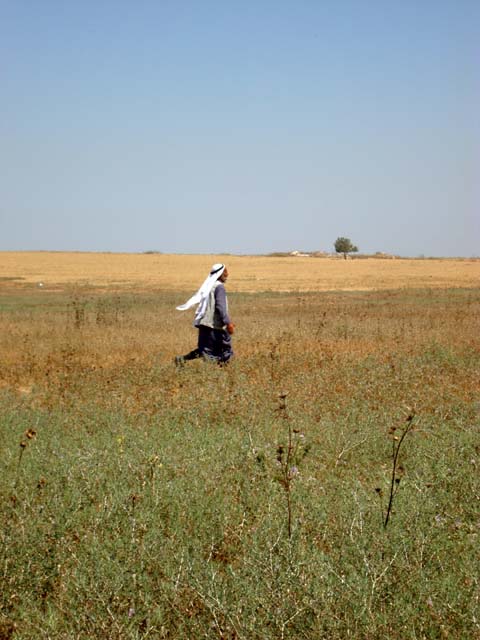
Sixteen of us (family, international accompaniment from the ISM, and local rights activists and volunteers from Beit Hanoun) set out this morning to comb the land for the missing youth. The terrain is dry weeds and tall, prickly scrub, making walking difficult.
We accompanied the father -Abu Ayesh- and a local who knew the area well, filming and attempting to convey to the soldiers shooting at us from jeeps that we had come to retrieve a corpse.
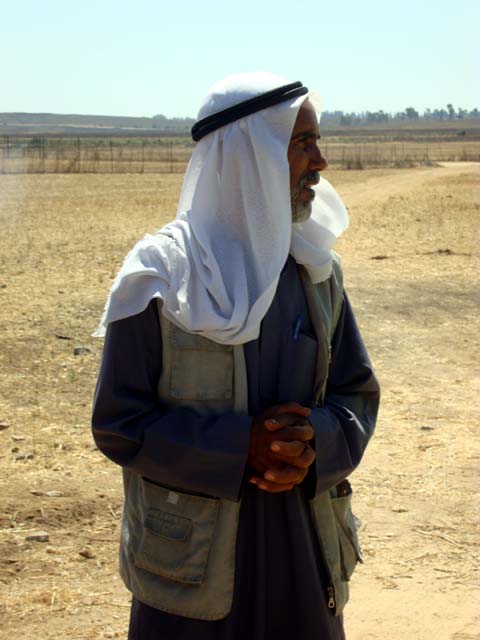
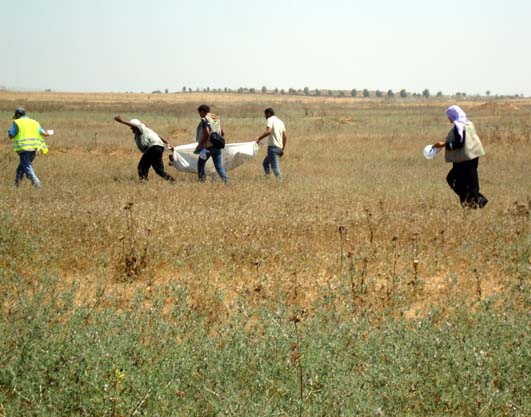
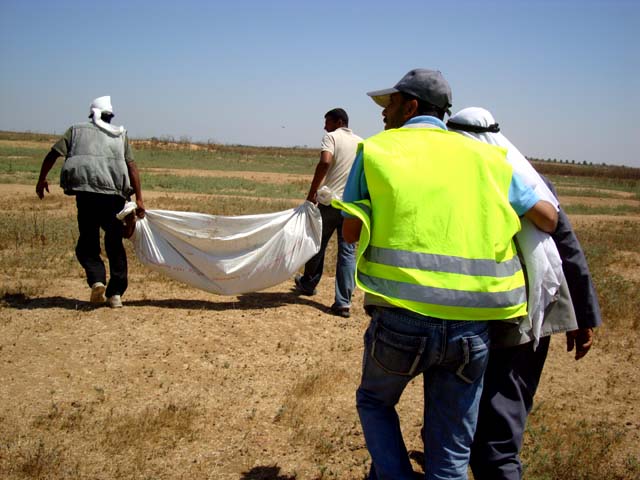
The shooting, along with 2 loud explosions, likely sound grenades, became more intense and closer when the body was actually spotted and the team started to load it onto a white sheet. As we quickly loaded Abu Hashish onto his cloth stretcher, the shooting continued.
Abu Ayesh had been further off, and thankfully missed the scene of his son’s body, 54 days decomposed, falling apart, head falling off.
Muslims place great importance in burying the dead immediately. Nearly 2 months after his death, the anguish of the Ahmed Abu Hashish family is great, his body desecrated by the elements, they denied access to it due to the threat of being shot by Israeli soldiers at the border –who indeed did shoot when we retrieved the body.
I wanted to know, what was he doing in the area close to the border. Was he resistance?
No, I was told, he was a Bedouin youth, poor family, probably wanted to try to cross into Israel to look for work. “Hua zift min el dinnia,” –he was worn down by this life.
The exact circumstances of his death are yet unknown, but it can be assumed that Ahmed Abu Hashih died from gunshot wounds, shot by Israeli soldiers at the border hundreds of metres off.
As we returned with his dead son, Abu Ayesh cried out, uttering phrases of grief and mourning. Soon after reaching the road, a donkey cart arrived to take away the corpse. At the same time, Ayesh, Ahmed’s brother, arrived, dropping his motorbike, and began to wail his sorrow in a high-pitched woman’s shriek.
*listen for the father’s anguished lamentations, the brother’s shrill wail (at the end of the clip)
Monday, June 15, 2009
Sunday, June 14, 2009
Gaza farmers brave Israeli bullets
Electronic Intifada
Rami Almeghari writing from the occupied Gaza Strip, Live from Palestine, 8 June 2009
For more than six decades, the al-Buhairi has family lived on and farmed their land near the boundary with Israel, to the east of Maghazi refugee camp in the central Gaza Strip. Last week Israeli warplanes dropped leaflets warning individuals not to set foot in a 300-meter-wide (1,000 foot) strip of land on the Gaza side of the border.
"We have been here for many years planting peppers, watermelon and wheat," said Mustafa al-Buhairi, 38, standing amidst pepper plants near his home. But "after the last Israeli war against this region in January," he said, "we began to see new Israeli restrictions against our area."
In the last month, Israeli warplanes dropped thousands of similar leaflets on borderline communities from Rafah in the south of the Gaza Strip all the way to Beit Hanoun in the north.
"Suddenly, Israeli F-16 fighter jets made a loud noise then dropped a box that exploded in the sky spreading papers all over our farmland," al-Buhairi recalled.
Al-Buhairi voiced his anger over the Israeli measure explaining that his entire family, including his six children and two brothers, have been badly affected because they are unable to safely work their land.
Despite the risk, al-Buhairi said the family has to continue trying to farm the land because their livelihood depends on it "Yet we are working under risk," he said.
"Four days ago I was irrigating some olive trees which are located beyond the designated limit of 300 meters. Three bullets were shot from that military post on the hilltop," al-Buhairi said, indicating the direction. "One went to the left of me, one to the right and the third over my head."
The leaflets are accompanied by Israeli soldiers patrolling the border area with tanks and jeeps and surveilling the area from watchtowers.
The soldiers have shot at al-Buhairi and his family members with increasing frequency despite the fact that the family's house and land are about 700 meters (2,300 feet) from the border.
Al-Buhairi said the soldiers shoot even up to one kilometer from the border which has made it extremely difficult to harvest produce. He asserted that since the leaflets were dropped, production has fallen sharply.
Nevertheless, al-Buhairi and other farmers harvest their wheat, even under fire: "When they open fire we disappear, and when they stop, we come back."
The al-Buhairi family already lost half of its livestock as Israeli tanks shelled the area near the family home during last winter's invasion of Gaza.
"You see that rubble," al-Buhairi said, pointing to the remains of a building. "That used to be our livestock pen with more than 50 sheep. A tank shell destroyed it, killing 25 of them."
Al-Buhairi and his 80-year-old father echoed a similar sentiment: they had nowhere else to go during the Israeli attack. "We have no other choice, either we live here or we die here."
According to international organizations, the amount of damage on the border area in eastern Gaza Strip could not be properly assessed. The United Nations Food and Agriculture Organization (FAO) says that the area is too dangerous due to continued Israeli army actions and indiscriminate fire against such rural areas.
More than a decade ago, when Israeli occupation forces were present inside Gaza, rather than on the perimeter, Israel declared a one-kilometer buffer zone in an attempt to prevent attacks by resistance forces targeting border patrols.
The current 300-meter limit swallows more than 30 percent of Gaza's arable land, according to the FAO.
Rami Almeghari is a journalist and university lecturer based in the Gaza Strip.
Rami Almeghari writing from the occupied Gaza Strip, Live from Palestine, 8 June 2009
 |
| Mustafa al-Buhairi's family are unable to work their land because of Israeli army threats. (Rami Almeghari) |
For more than six decades, the al-Buhairi has family lived on and farmed their land near the boundary with Israel, to the east of Maghazi refugee camp in the central Gaza Strip. Last week Israeli warplanes dropped leaflets warning individuals not to set foot in a 300-meter-wide (1,000 foot) strip of land on the Gaza side of the border.
"We have been here for many years planting peppers, watermelon and wheat," said Mustafa al-Buhairi, 38, standing amidst pepper plants near his home. But "after the last Israeli war against this region in January," he said, "we began to see new Israeli restrictions against our area."
In the last month, Israeli warplanes dropped thousands of similar leaflets on borderline communities from Rafah in the south of the Gaza Strip all the way to Beit Hanoun in the north.
"Suddenly, Israeli F-16 fighter jets made a loud noise then dropped a box that exploded in the sky spreading papers all over our farmland," al-Buhairi recalled.
Al-Buhairi voiced his anger over the Israeli measure explaining that his entire family, including his six children and two brothers, have been badly affected because they are unable to safely work their land.
Despite the risk, al-Buhairi said the family has to continue trying to farm the land because their livelihood depends on it "Yet we are working under risk," he said.
"Four days ago I was irrigating some olive trees which are located beyond the designated limit of 300 meters. Three bullets were shot from that military post on the hilltop," al-Buhairi said, indicating the direction. "One went to the left of me, one to the right and the third over my head."
The leaflets are accompanied by Israeli soldiers patrolling the border area with tanks and jeeps and surveilling the area from watchtowers.
The soldiers have shot at al-Buhairi and his family members with increasing frequency despite the fact that the family's house and land are about 700 meters (2,300 feet) from the border.
Al-Buhairi said the soldiers shoot even up to one kilometer from the border which has made it extremely difficult to harvest produce. He asserted that since the leaflets were dropped, production has fallen sharply.
Nevertheless, al-Buhairi and other farmers harvest their wheat, even under fire: "When they open fire we disappear, and when they stop, we come back."
The al-Buhairi family already lost half of its livestock as Israeli tanks shelled the area near the family home during last winter's invasion of Gaza.
"You see that rubble," al-Buhairi said, pointing to the remains of a building. "That used to be our livestock pen with more than 50 sheep. A tank shell destroyed it, killing 25 of them."
Al-Buhairi and his 80-year-old father echoed a similar sentiment: they had nowhere else to go during the Israeli attack. "We have no other choice, either we live here or we die here."
According to international organizations, the amount of damage on the border area in eastern Gaza Strip could not be properly assessed. The United Nations Food and Agriculture Organization (FAO) says that the area is too dangerous due to continued Israeli army actions and indiscriminate fire against such rural areas.
More than a decade ago, when Israeli occupation forces were present inside Gaza, rather than on the perimeter, Israel declared a one-kilometer buffer zone in an attempt to prevent attacks by resistance forces targeting border patrols.
The current 300-meter limit swallows more than 30 percent of Gaza's arable land, according to the FAO.
Rami Almeghari is a journalist and university lecturer based in the Gaza Strip.
Subscribe to:
Posts (Atom)


